
Ten years on from the Brexit decision, do we actually know the EU we might now be open to having closer relations with? Sarah English, a Brussels-based Scot, poses pertinent questions in her first Sceptical postcard from Brussels
Prime Minister Andy Burnham’s comments at Labour Party conference and in various statements since certainly makes it look like it’s time to get a conversation going again on Scottish/UK-EU engagement. But how well are we placed to do that in Scotland? Who will lead the conversation – and who will take part?
In the past weeks, there have been lengthy discussions on Radio Scotland’s flagship Breakfast show following the Prime Ministers’ statements on future options for the EU-UK relationship – options which could include rejoining the single market, the customs union, or even going ‘all the way’ and rejoining the EU entirely. The PM has also shared his own questions around the Brexit vote and foreign interference in this (and other) elections and the importance of collaboration with others on this as well as immigration, defence and AI.
Does this new conversation on external engagement at the UK level present an opportunity for Scotland, which never voted to cut connections to the EU in the first place?
Ten years on from the Brexit decision, do we actually know the EU we might now be open to having closer relations with? Do we still understand their interests and motivations? And, importantly, do we have the relationships and connections still in place to prepare ourselves with the right information and understanding to consider what a different relationship should be? And do we know what the EU would want from a closer UK/Scotland partnership?
In the early years following the 2016 vote discussions in Scotland were hindered by general disbelief – either about the result, or that it would have any meaningful change. Expectations were high for a ‘soft Brexit’. Focus was on the things we could still do, the relationships and friendships that the other side were keen to maintain, the projects we could still participate in (sometimes with our own money, to be sure), and the legislation that would impact us even if it was designed for our neighbouring market. That market was still our single biggest export customer and the EU an influential global regulator.
As the years began to pass without clarity on the relationship between the EU and the UK, access to funding programmes, to the EU market, and to understanding the reach and impact of legislation on non-members in the EU orbit became critical issues. So did the warning about how much harder we’d have to work as a non-member of the EU to achieve the same results we were used to.
Scotland needs to reconnect
These strong, positive statements by Burnham and by some political leaders within the EU present Scotland with an opportunity. But we must consider the changed context and be very honest that in the confusion following the referendum crucial messages on the work and effort required simply to maintain, let alone develop, EU relations were not heeded – or were not acted upon. Brexit preparation was quickly overtaken as a national priority when COVID hit. We are not the same well-connected UK that narrowly voted to leave the EU in 2016.
In Scotland we made what we could of our advantage that our vote was very clearly in favour of the European project. But that can only take you so far and last so long without being replaced with an active, strategic plan for engagement. We have lost, deliberately as well as inadvertently, much of our connections and the people with the skills and experience to maintain and build them – and we continue to do so.
While we may not have anyone in place on many key issues, we do have friends around many of the right tables. But these connections will only be useful to Scotland if we are aware of them and are ready to use them. Jumping back into the conversation now is going to be challenging. That’s the thing with memberships; the benefits come from using the club, knowing the rules and helping change them – not just being in or out.
The EU has moved on – how about Scotland?
are we too involved with promoting a fictionalised version of ourselves to engage?
We may now have a UK Prime Minister calling for closer integration with our European partners to support growth, and a particular focus on collaboration on immigration (we cannot control it alone), looking to position the UK as honest broker on the world stage. But a lot has happened in the past 10 years – war in Europe, global energy and cost of living crises, political change and the rise of the right in Europe.
The EU has moved on from Brexit in ways we have not fully understood, while we’ve been very, very focused on our own domestic crises. While the EU is open to engaging with the UK, they are still waiting for concrete proposals from London.
So as preparation begins for the next instalment of the post-Brexit drama, with Burnham now leading for the UK in the run up to the November 20th EU-UK summit, is Scotland aware enough about our part in this developing story?
Is there a clear enough sense of ourselves and how this looks in relation to others at this moment to develop a strong, new offer for collaboration? Can Scotland convene a discussion to develop this, and implement it? Or are we too involved with promoting a fictionalised version of ourselves to engage with this opportunity?
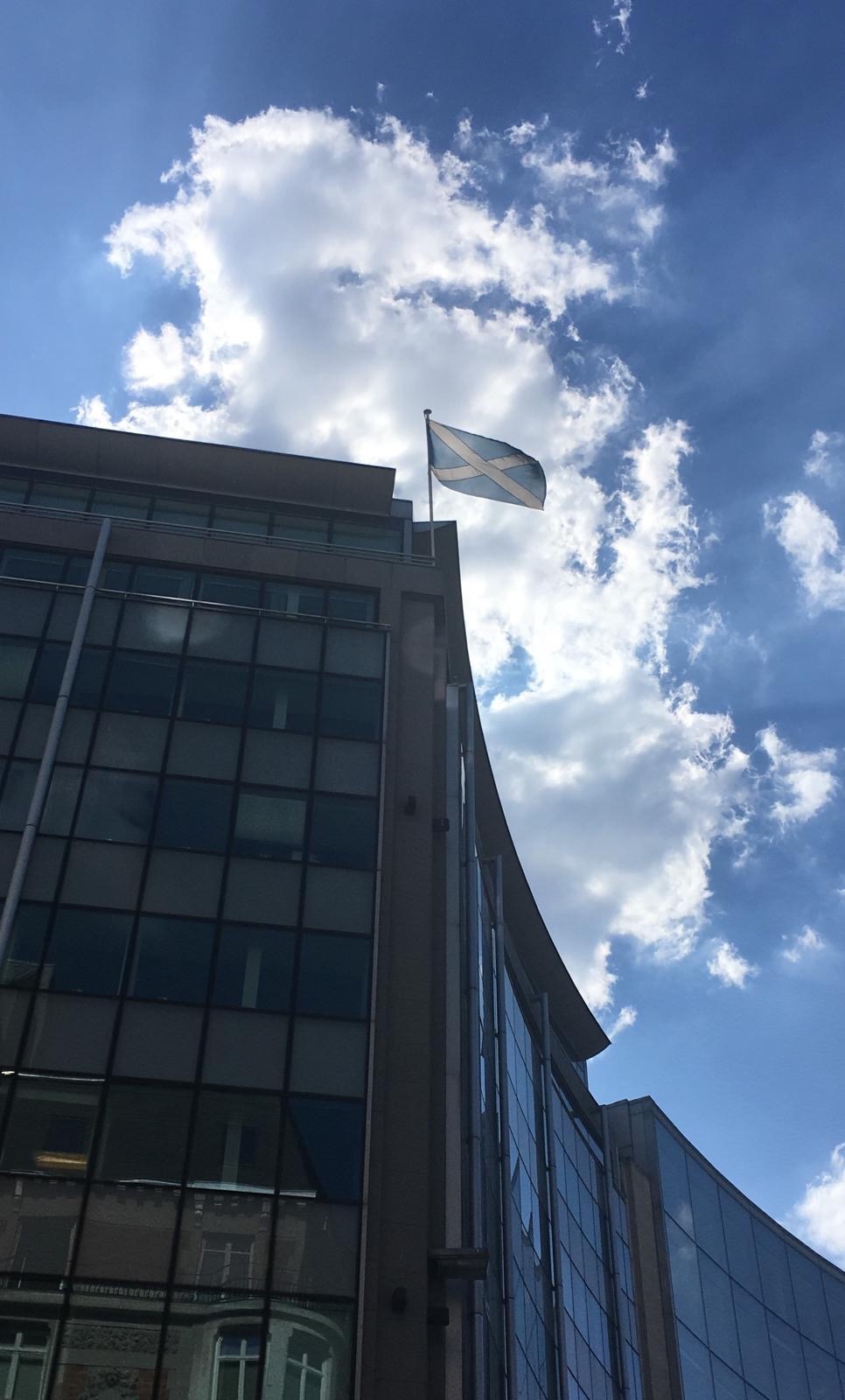
Feature image; Saltire above EU Commission, Berlaymont at Robert Schuman roundabout in Brussels. Photo Sarah English
Leave a Reply