
Scotland’s reshaped councils should be embedded in a constitution that delivers the promise of ‘parity of esteem’ between central and local democracy.
In Part 2 of his appraisal of proposed plans for local government reform, Keith Yates, urges Scottish Government to discover the latent power and strength of Scotland’s rich diversity. He identifies the four building blocks of local democracy that offer a firm foundation for a collaborative future of creative growth.
Let’s start with a given. The Scottish Government’s proposals to retain the island authorities are indisputable. Integrating other public services was first advocated over twenty years ago. It made good sense then – and now.
The then Lib-Lab coalition Scottish Government had funded proposals which would have provided single authority solutions defined by the geographies of the island communities. That involved health boards, colleges and other bodies, but they were rejected by the new minority SNP Scottish Government in 2007 [see footnote]. Now these ideas have been resurrected in local governance reform for bespoke solutions for island communities.
If single authority structure is appropriate for councils with populations of less than 25,000, then why construct two tiers of local democratic control alongside a bloated confection of non-democratic bodies elsewhere? The notion that only large regions can be strategic and that they must meet some criteria of size is inconsistent with the geographic reality of how Scotland’s places work.
Scotland is richly diverse: geographically, historically and civically. There are island authorities, city regions both big and small along with large rural areas that share economic activities like agriculture, forestry, energy production, and tourism – all yoked together by remoteness and extensive transport networks. There are also other long-established and accepted administrative units or counties that might contain several towns of similar size.
These four types of geographic units should be the building blocks of local democracy.
Scotland’s reshaped councils should be embedded in a constitution that delivers the promise of ‘parity of esteem’ between central and local democracy. This is the norm in most European countries where the European Charter of Local Self-Government gives legal protection of local autonomy. Is that too big an ask for Scotland? The starting point for reviewing the shape of local authorities should be how to tidy up the 1996 reorganisation to better match the geographical realities of place. This should be achieved by voluntary agreement with authorities, not the top-down imposition that occurred in 1996.
Building on the existing structure of local democracy
A more evolutionary reform of local democracy would be achievable within the life of this Scottish Parliament.
Island Authorities (3)
It appears to be a settled view that the three island authorities: Comhairle nan Eilean Siar, Orkney, and Shetland should continue. They have an Islands Growth Deal to combine resources and share expertise to develop projects. A positive change would be to transfer responsibility for colleges, careers, social work and health partnerships to the authorities and to establish a mechanism to second staff from the non-democratic bodies to work within the authorities.
City Regions (6)
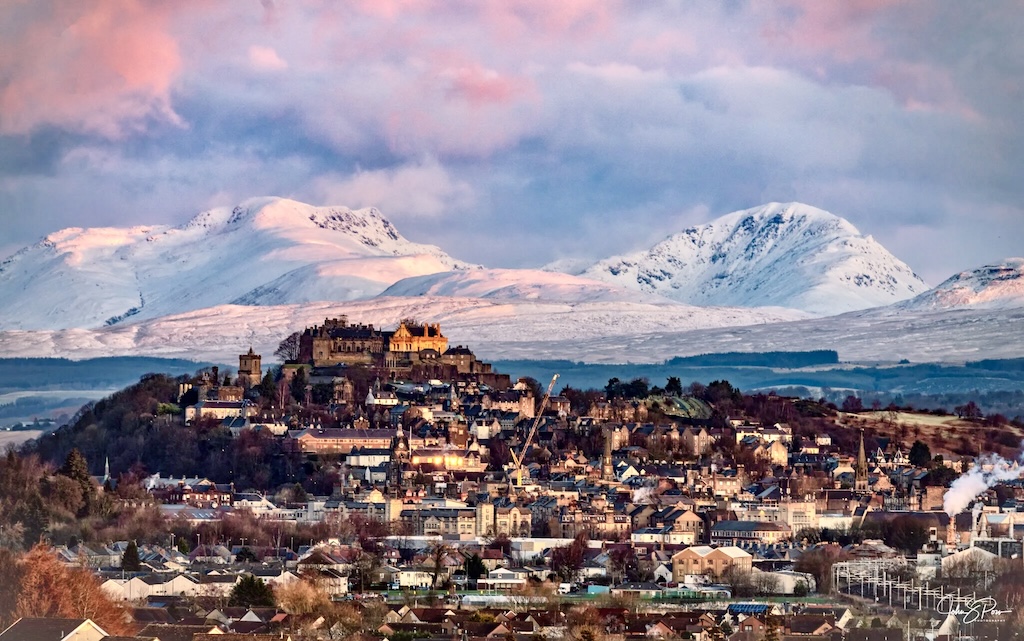
There are six City Regions that have been granted City Growth Deals: Glasgow; Aberdeen and Aberdeenshire; Inverness and the Highlands; Edinburgh and Southeast Scotland; Stirling and Clackmannanshire; and Tay Cities – which includes both Perth and Dundee.
- Aberdeen and Aberdeenshire – a merged City Region has been under discussion since 2007 and there has been a City Deal since 2016.
- Stirling and Clackmannanshire had plans to merge in 2007, but political changes following creation of multi-member wards thwarted these plans. A City Deal has been in place for this city region since 2020. Merging the councils would better reflect the geographic spheres of influence.
- Perth and Dundee are both part of Tay Cities Deal but have different and distinctive economic characteristics. Would they function better as separate City Regions?
- Inverness is the focal point of Scotland’s largest local authority, covering a third of Scotland’s landmass. It might be better classified as one of six rural authorities embracing large geographic catchments.
- Glasgow and Edinburgh City Regions pose more intractable problems. The cities’ sphere of influence extends widely into adjacent local authority areas. They would resist being transferred into a far larger entity dominated by the two existing city councils. Outlying council areas have grown rapidly since the last reorganisation as the two cities have expanded economically and physically. This, along with transformation of the governance and management of these councils, has resulted in many of them being both cost-effective and high-performing – contradicting Scottish Government’s belief that size determines the efficiency or effectiveness of a council area. The surrounding councils are already incorporated into City Growth Deals for Glasgow and Edinburgh City Regions. Wouldn’t it be more pragmatic to allow these collaborations to mature than to disaggregate them into the galaxy of new second tier local governance.
- Inverclyde and Renfrewshire – here there could be a case for combining. Dramatic depopulation of Inverclyde in recent years has created difficulties in maintaining services with much-reduced budgets. Renfrewshire, covering the two authorities, was a well-functioning sub-region in the days of Strathclyde Regional Council.
City Regions would include joint agreements for delivery of transport, major economic and planning developments, social work and health partnerships. These agreements could be expanded over time – reducing inevitable disruption and delays resulting from the creation of a new, untested two-tier system.
There is a case for some surrounding councils to be merged with Glasgow and Edinburgh, but in the immediate future, it would be more practical to allow City Deal partnerships to provide the governance structure. Longer term, there would be merit in extending boundaries of city authorities, but this should follow a period when collaboration between the authorities – and devolving of functions from central government – has been tested through deepening the City Deal partnerships.
Rural Authorities (5 or 6)
If Inverness and Highland were to be considered a rural region, there would be six rural local authorities: Highland, Argyll, Angus, Moray, Dumfries and Galloway, and the Scottish Borders. Highland has a City Region Deal focused on Inverness. Argyll, Scottish Borders, and Moray have Growth Deals. Dumfries and Galloway has no deal at present.
Angus is part of the Tay Cities Region Deal along with Dundee, and Perth and Kinross. If Perth and Kinross, were to become a city region separate from Dundee, it would raise the question of whether Dundee and Angus remain with a separate City Region Deal or Angus obtains a separate Growth Deal.
Administration Units or Counties (3 or 4)
Missing from the above list are those long-established administrative areas that contain several towns of similar size but within a wider sphere of influence. These units are well accepted across their communities:
- Kingdom of Fife has three focal points in Dunfermline, Kirkcaldy, and St Andrews, as well as the new town of Glenrothes, but has resisted all attempts to break up the kingdom with its strong sense of identity.
- Ayrshire has a long history as an administrative entity, a Growth Deal, and there have been recent merger discussions between the three existing councils.
- Falkirk also has a Growth Deal in response to significant reduction in petrochemical activities at Grangemouth and other industrial decline. There must be a heightened focus on these problems.
Tidying Up Some Boundary Conflicts
There are council boundaries that do not match the spheres of influence. As former Depute First Minister, Kate Forbes, argued, the Highland Region is too big.
Fort William and Lochaber link more naturally with Argyll than the Highland Region. Helensburgh and Lomond fit more naturally with West Dumbartonshire than Argyll. Rutherglen and Cambuslang were part of – and retain stronger links with – Glasgow than South Lanarkshire. Changes to these and other boundaries would be far easier to implement than a seismic reorganisation to two-tier Regional and Community authorities.
A more evolutionary reform of local democracy would be achievable within the life of this Scottish Parliament. All it needs is the active engagement of existing authorities and a willingness of the Scottish Parliament to incentivise some mergers through devolving additional services – such as social work and health partnerships, and colleges to councils
A latent force for growth
There should be an enhanced role for local communities. Under the present system, community councils do not have the powers to provide local services that were a distinctive and important part of local democracy pre-1975 reorganisation. Until then, there had been 424 local authorities: 33 counties, 4 cities, 20 large burghs, 169 small burghs, and 198 landward districts. Burghs (large and small) and landward districts had responsibility for functions like halls, monuments, events, and parks that were symbols of civic pride.
Now, Scotland’s 1369 community councils – about 10% of them inactive – do not have this responsibility. They are primarily consultative bodies. This is frustrating for communities (although the 350 Development Trusts have generated many innovative developments). At their best, community councils are elected, have representation from local councillors, and collaborate with Development Trusts, but this is not universal. With greater powers they could manage civic functions through agreement with their council. Releasing ideas, energy, and skills of local communities is a latent force for growth that devolution has overlooked.
This would not mean 120 to 160 community authorities. Communities vary in size from towns like Galashiels, Dunblane or Oban (with populations of around 10,000) to rural villages like Strontian or Fintry or islands like Eigg or Gigha with populations in the hundreds, but which have achieved remarkable developments. Size matters less than the sense of identity or place. It would be a retrograde step to create a new set of community authorities by disaggregating existing councils that would still contain dozens of smaller communities lacking the focus of small village communities. Far more effective, instead, to furnish existing communities with powers to take on developments and to negotiate some civic responsibilities with their council.
Returning power to local democracy
Just as important as reshaping local government is the repatriation of public services that have been centralised over the past thirty years.
That has caused confusion about responsibilities – and, arguably, has been a major cause of delays to development: investment priorities have often been at variance. The lived experience of those who worked in local government before the 1996 reorganisation and creation of the Scottish Parliament is that policies and projects were delivered far quicker than has been possible since centralisation of many functions by the Scottish Government. Together with the freezing of Council Tax and excessive use of ring-fenced budgets, this has meant that Scottish-wide priorities usually overrule local priorities. This has been a significant factor in the collapse of trust in both Scottish Government and local government for the last 30 years.
Growth depends on economic development, and this requires the participation of local governance working in harness with the private sector. It would help if skill training and colleges were part of that. Equally, some of the 135 quangos could be devolved to local authorities, or staff could be seconded to work at the council level. They would become more effective team players in recognising opportunities and advancing local priorities. Simply merging a few quangos at the Scottish level (as in the public sector reform agenda), is not going to make local decision-making any quicker or easier.
Scottish Parliament has been reluctant to tackle the wicked issues. It has shied away from Council Tax modernisation, the cost and effectiveness of outsourcing, funding care services, and been opposed to extending devolution to the local level. In doing so, it has underutilised the institutional knowledge of Scotland’s councils and communities. Local democracy, allied with local businesses, academic institutions, churches and active communities have always sparked innovation – a key engine of growth.
This is how Scotland built its reservoirs, sanitation schemes, schools, hospitals, libraries, gas works, electricity generation, social housing, parks, leisure facilities, and public baths. Enlightened innovations, many of which Scotland bequeathed to the wider world. Rooted in collaboration at the local level where problems were identified and solutions found.
Acting local and thinking Scotland would make a good mantra, but an even better principle for the devolved governance of Scotland.
Footnote: The single-tier for islands proposal stemmed from Tom McCabe’s time as Minister of Finance and Local Government, circa 2005. Funding was given (£500k approx) so that proposals could be worked up by Orkney supported by the Improvement Service. That was abandoned after the 2007 election..
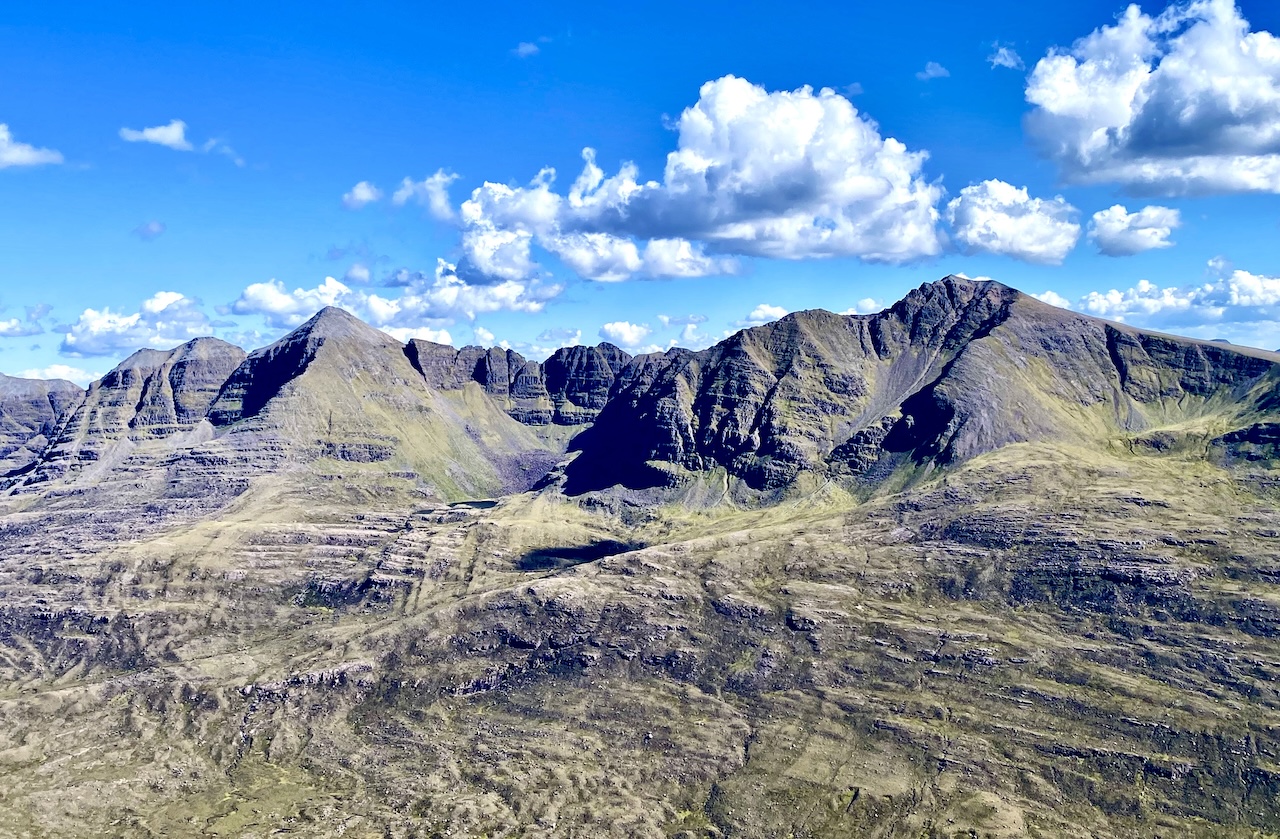
Feature image: an inspiration for creativity, Liathach in the Torrodons, taken from Beinn Dearg, photo Keith Yates
In Part One Keith Yates viewed Scottish Government’s proposed plans for local government reform with his lived experience of two previous reorganisations and urged them to channel their inner Gerry Rafferty ‘Get it right next time’
Leave a Reply