
Why is the Scottish Government so reluctant to take on the ‘invisible landowners’ who own so much of Scotland – and the vested interests of grouse shooting lobbyists? It is time landowners were obliged to act in the public interest, argues Max Wiszniewski
In the public reception hall of the Scottish Parliament stands an information pillar to Scotland’s land reform journey. Far from a controversial subject, it stands amongst other displays that address mental health, our country’s youth and other important areas our Parliament is responsible for. It acts as a general acceptance that our national land journey is important to our people.
Yet, after 27 years since the Parliament reconvened with several land reform acts, efforts to make our land more prosperous and accessible for us all have gone backwards.
The lack of political will to tackle the leftovers of feudalism has left 408 landowners owning half Scotland’s private rural land. And the number is shrinking. A year ago, this figure was 421 landowners. Meanwhile, sky-high land prices have surpassed the level of affordability for many potential community buyouts. The timidity of the political class is why things have got worse. But why?
Invisible power deters action
‘Participants expressed concerns that the “invisible power” of large landowners is the underlying cause of government inaction.’ The Big Land Question
The biggest independent exploration into Scots’ attitudes to land reform, The Big Land Question published by Diffley Partnership and Revive in November 2025) showed the public’s concern over the ‘invisible power’ held by large landowners, despite them being so few in number. The same research showed overwhelming public support for key measures like a land tax on large landowners) with about 7 in 10 Scots supporting it). Additionally, 8 in 10 Scots want obligations on landowners to aid in climate and nature targets. Yet Scotland remains one of the most nature-depleted countries on Earth so it is clear that many large landowners do not meet public expectations.
The Scottish Government seems terrified of the legal challenges and political reviews regularly threatened by landowner lobbyists. Even if compulsory purchase or compulsory sales of land is legal, if it is in the public interest, there are many other levels to disincentivise the buying up (and selling short) of Scotland.
It is now widely acknowledged that land taxes are a key lever to pull which would reduce exorbitant land values and allow for public reclamation to become more cost effective. This is even backed by the Government’s own Land Commission who wants local authority powers to tax landowners. The SNP manifesto is (either helpfully or unhelpfully) vague on its ambitions for this, calling instead for a ‘Rural Renewal Bill’.
The newly elected Scottish Government must also stop being afraid to take on big shooting interests. According to research published by Scottish Land and Estates, Scotland’s main shooting lobbyists, estates use up around 53% of Scotland’s landmass and 78% of estates do ‘country sports’ like grouse and pheasant shooting.
A pitiful contribution
Yet the economic contribution of ‘country sports’ is pitiful, contributing just 0.03% of Scotland’s overall economy. In other words, if Scotland’s economy was the height of Ben Nevis, sport shooting’s contribution would be the height of a bottle of Irn Bru. Grouse shooting’s economic contribution will be a small portion of even that pitiful amount. Yet despite the land that grouse moor managers deliberately destroy ad burn, and the hundreds of thousands of animals killed every year – so more grouse can be shot for sport – politicians have not been willing to end its worst practices.
The landowner lobby successfully delayed the full intended implementation of the recent grouse moor licensing bill via legal threats, creating a loophole which has now thankfully been closed, but this perhaps outlines some of the reasoning behind the reluctance to end the worst parts of these archaic industries while fewer people than ever own more and more of Scotland.
” Many firms which failed to comply with Scottish land laws are controlled by legal professionals. The Ferret
Enough is enough. The demand for change is getting louder and louder. Several bills in Scotland’s recent land reform journey contain some potentially useful stuff, but what we need now is real land reform.
Real land reform is about changing how Scotland’s land is owned and used for the benefit of Scotland’s people, wildlife and environment. We need to oblige existing landowners to act in the public interest – not just subsidise them with public money in the hope they do the right thing. If they want large parts of Scotland they must also bear responsibility to act for our climate, biodiversity, animal welfare, and to enrich our local communities.
Real land reform would also create the disincentives needed to stop just a few people owning most of the country’s land – helping us diversify ownership so many more of us can benefit from it. The Big Land Question shows that this is what Scotland wants.
First published Reforesting Scotland 74 Autumn/Winter 2026
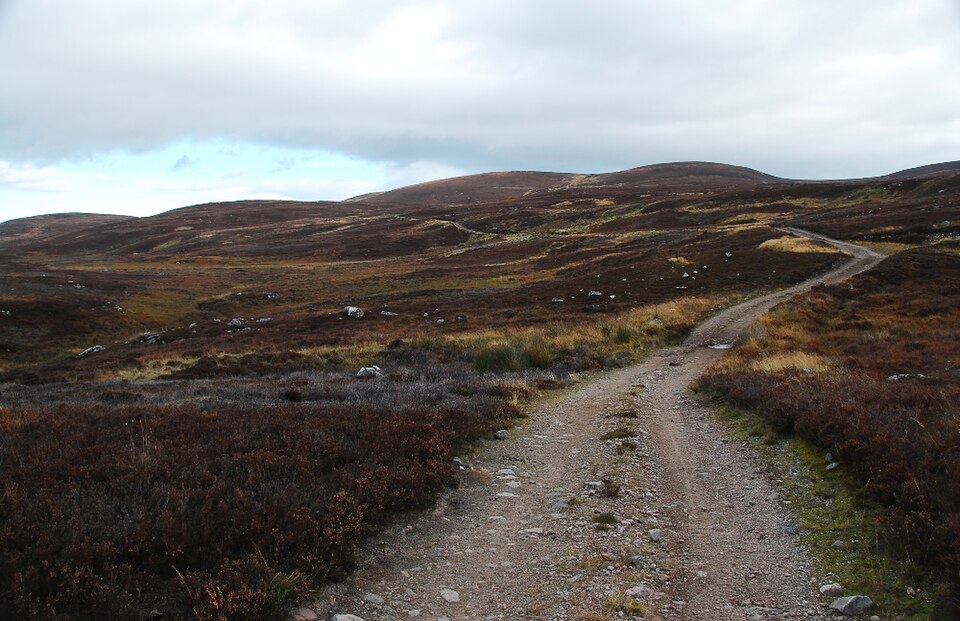
Feature image: Track through the grouse moors, Golspie by Ian Balcombe, CC BY-SA 2.0 via Wikimedia Commons
Further reading
Andy Wightman: Ministers confirm Scottish Land Commission member reduction
Revive.scot: What Scotland wants: real land reform for our people, wildlife and environment
The Ferret: Hundreds of offshore landowners are illegally flouting Scotland’s land control register/
Leave a Reply