
…with such high levels of fragmentation, some PR systems would not even robustly reflect the fact that the two pro-Brexit parties combined did not win 50% of the vote share.
Perhaps the only thing on which Nigel Farage agrees with the Liberal Democrats and Green Party is the need for electoral reform in British politics.
More and more politicians in the UK are pitching for a move to proportional representation (PR), an electoral system in which the overall vote share a party wins determines the number of seats in the legislature. This includes some within the Labour party but not leaders in the Conservative Party, which is doing very well under the current first-past-the-post (FPTP) system, in which MPs are elected with a majority in local constituencies.
But how would the UK’s December 12 election have turned out under PR? My research has shown how different electoral systems create distance between the policies preferred by voters and those enacted by political parties that breeds dissatisfaction with democracy. I’ve now analysed the British election result to look at how it might have turned out differently under alternative voting systems.
Any exercise to model an alternative election outcome comes with the major caveat that we don’t know how a different electoral system would affect voting behaviour, especially in the long term. There are also plenty of different flavours of PR. Some, such as the single transferable vote system in Ireland and in local elections in Northern Ireland and Scotland, we can’t model because they would require too much information we don’t have about the different preferences of voters.
I focus here on two PR systems that contain some provisions that would address concerns in the UK about voting for candidates and not just parties: the Dutch and the German electoral system.
Read more: If you are disappointed with the election result, there are things you can do to help you move on
Dutch versus German system
The Dutch system is the most proportional because all voters choose from a single national list of candidates, rather than selecting representatives for their local district. Voters pick a party and then their chosen MP from that party. This allows voters to either vote for local candidates or nationally popular figures. Any candidate that receives a certain percentage of the vote wins a seat in the parliament.
In contrast, the German mixed-member system allocates half of the seats to constituency candidates under FPTP and the other half to regional lists of candidates.
To model what would have happened in the UK under each of these electoral systems, let’s assume that the number of seats remains as it is at 650. In the Dutch case, this would mean that a vote share of 0.154% translates into a seat, 15.4% into 10 seats, and so on.
Under the German system, we would need to redraw constituency boundaries to create 325 seats that would still be allocated under FPTP and create another 325 seats elected from regional lists. A party gets its vote share from these lists translated into seats if it receives at least 5% of the votes, or if it wins three constituencies.
In the real German system, citizens have two votes, one for the constituency contest and one for the list vote. Here, we have to work out the results of both contests from the one vote people cast. My calculations are based on halving the number of seats each party won to give the constituency results, and using their final vote shares to give the list results.
The basic translation of the election result is presented in the graph below. The Conservatives would not have won an outright majority under either PR system, although they would have won more than 300 seats under the German mixed-member system. The Liberal Democrats do better and the Scottish National Party (SNP) worse under both systems. The Brexit Party and the Greens would only benefit under the Dutch system because both fail to reach the German electoral threshold of 5%.

There are some things that cannot be factored in. For example, as the Dutch system doesn’t use electoral districts, all parties are electable everywhere in the country. That means that English voters could vote for the SNP or Irish voters in Britain could vote for Irish nationalist parties. But also, Northern Irish voters could choose whether to stick with their traditional parties or instead get involved more directly in selecting the UK government by voting for one of the mainstream British parties.
Searching for a stable majority
The problem with such a simple comparison of seat allocations under different electoral rules is that it ignores even the most obvious flaw: under PR there are either no or very different needs for tactical voting.
Almost all the poll movement throughout the 2019 election campaign was from smaller to larger parties, from the Brexit Party to the Conservatives, from Liberal Democrats to Labour. This represents voters responding to a squeeze that was being applied by the electoral system.
Under a proportional system, there would have been no incentive for the Brexit Party to field a smaller number of candidates, or for Liberal Democrat or Green voters to contemplate lending their votes to Labour. The election result under PR may have looked much more like the polls a month before the election than like the result on December 12.
With this in mind, the second graph shows how the size and composition of different possible coalitions under the highly proportional Dutch system would have changed from the actual result to a more realistic vote share distribution taken from poll averages in early November. I calculated the averages from all polls published between October 30 when parliament voted for an early election to November 8, a couple of days after its dissolution.

A Labour/LibDem/SNP/Green coalition would have been slightly weaker before tactical voting took effect – with 324 seats – than it would have been based on the final result at 330. However, such a coalition would have been very difficult to hold together because, while unified on their position on a second EU referendum, the parties would have been at odds over Scottish independence as well as social, economic and fiscal issues. The only solid majority under either scenario would therefore have been an unlikely comeback of the 2010 coalition between the Conservatives and Liberal Democrats.
Read more: Why did Labour lose in the north of England?
The German system would have produced similarly unstable outcomes, but there would have even been an outside chance of a majority for the two pro-Brexit parties if the Greens had come close but failed to reach a 5% electoral threshold.
No PR system would have been likely to produce a workable majority for any sustainable coalition, but that is a reflection of the highly fragmented multi-party political system in the UK. And with such high levels of fragmentation, some PR systems would not even robustly reflect the fact that the two pro-Brexit parties combined did not win 50% of the vote share.
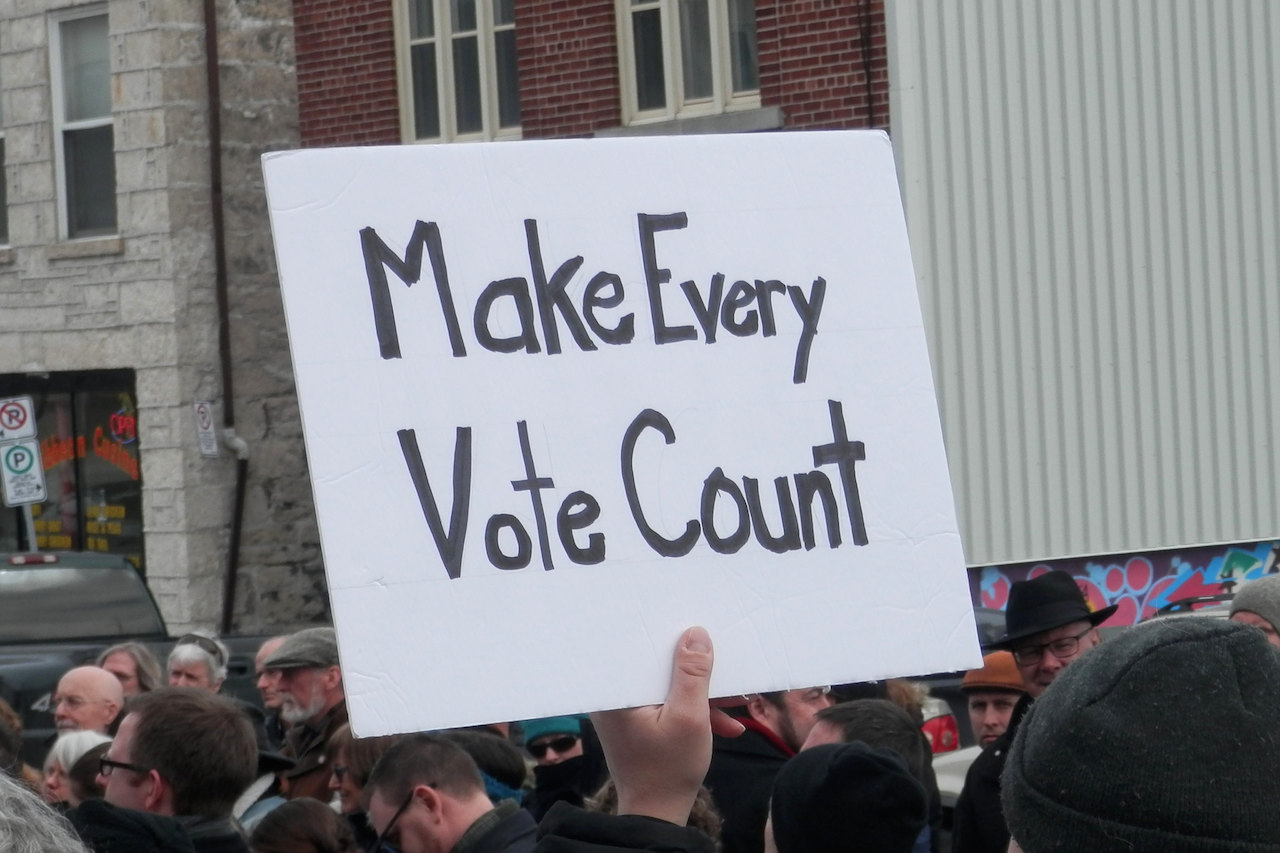
Featured image, electoral reform rally in Guelph, Canada 2017 Ryan Hodnett CC By-SA 2.0
First published in The Conversation
See also David McAllister on these pages: FPTP must go
The Independent: Hung Parliament and 70 Lib Dem MPs…
Leave a Reply