
Archaeology excels in giving insights into the everyday lives of people in the past. It is only very occasionally that we get those spine-tingling moments when we can connect the artefacts and structures we excavate to very specific people and events – such as the massacre of Glen Coe.
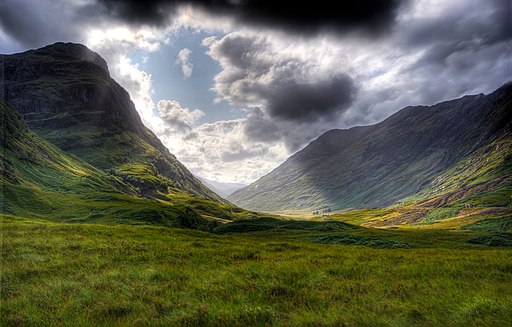
One of Scotland’s most iconic landscapes, Glen Coe is famous for its dramatic mountains and the brutal slaying that took place in 1692 when government troops killed 38 members of the MacDonald clan. Many more who fled in the wintry blizzard died of exposure in the freezing mountains.
In our recent excavations at Achnacon in the glen – 16 miles south of Fort William – we discovered a pin for holding on a plaid (a piece of material used to wrap around the body), musket balls, pottery and coins. These came from what we believe is the house of MacDonald of Achnacon, the head man of the village who escaped narrowly with his life in 1692.
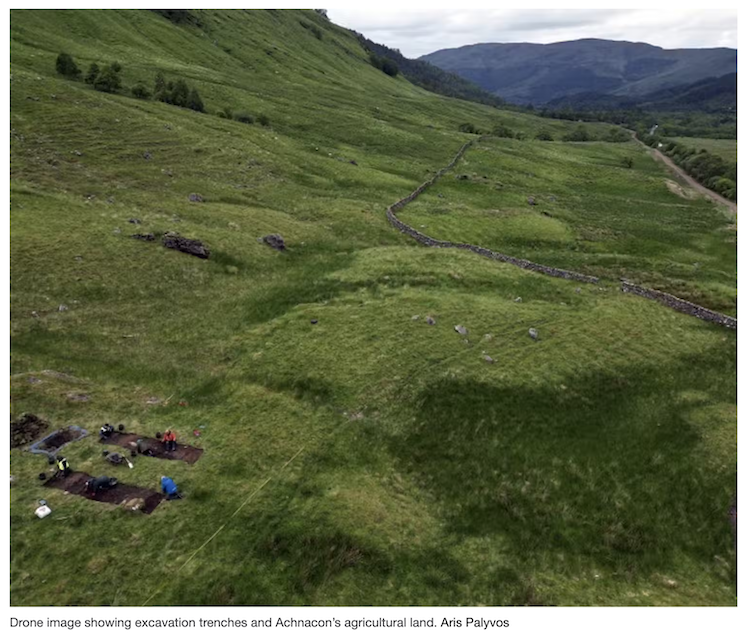
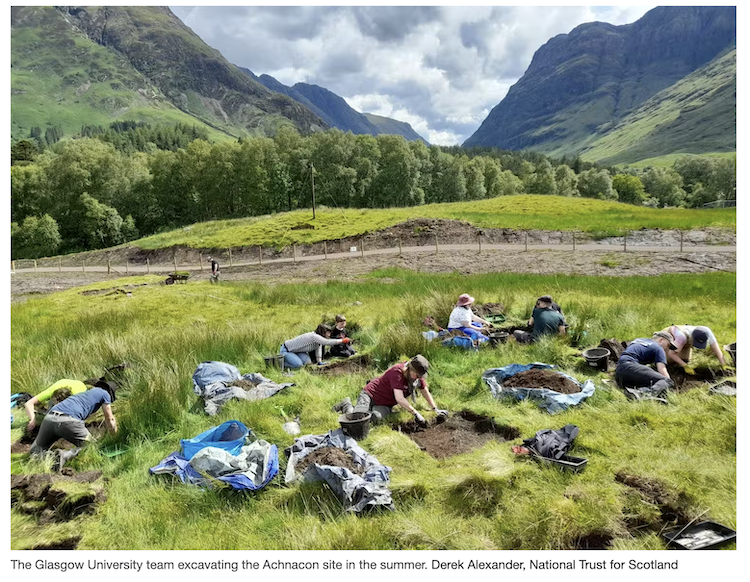
Today, together with Derek Alexander, head of archaeology at the National Trust for Scotland, our team of archaeologists from the University of Glasgow are weaving together new and old evidence to tell stories about those who lived, worked and died in Glen Coe hundreds of years ago.
We have uncovered tantalising traces of houses, fields and vegetable gardens which allow us to reimagine life in 17th-18th century Glen Coe. We can see how people grew their crops, cut peat and timber, and prepared and ate their food.
The team excavated garden soil more than 50cm deep that had been cared for across generations. In the narrow corridor between the boggy lands by the river and the bare rock of the mountain, we mapped the cultivation ridges where the people grew oats and barley, often with walls built of turf to keep out the cows.
Many of the artefacts show touchingly ordinary, everyday activities. The clay tobacco pipes and broken bottles of green glass are echoes of evenings spent drinking, smoking and storytelling. Spindle whorls beside a fireplace suggest where the women of the house sat and spun both wool and yarns on cold winter nights.
Imported German and French pottery highlights how connected these Highland communities were to the flow of goods and ideas across Europe, challenging the tired old narratives of backwardness and isolation.
Telling stories
In early February 1692, government troops were billeted with the Clan MacDonald of Glen Coe ostensibly for the purposes of collecting taxes (a normal practice at the time). After 13 days with soldiers in their midst, MacDonald of Achnacon, the “tacksman” or leader of this settlement, sat through the night with his brother and his friends around the fire. Were they carousing, or worrying over the presence of the soldiers in their community?
At around 5am, a volley of 18 musket shots ripped through the doors and windows of his house, killing many of those inside. MacDonald asked to be taken outside rather than being killed in his own home.
But he ripped off his plaid and flung it over the soldiers with their muskets raised to kill him and escaped into the inky darkness of the bleak February morning. From there he climbed through the blizzard over the passes south to safety. Three years later, he and other survivors gave evidence to a Scottish government commission of enquiry, whose report preserves their accounts of what happened.
During the excavations in Achnacon earlier this year, the finds from the turf-built house we believe to have belonged to MacDonald of Achnacon included a bent plaid pin and two pieces of lead musket shot. The latest datable artefact found in this house was a coin of 1690 – just two years before the massacre.
While we can’t necessarily pin individual artefacts directly to these events, we can use these tangible traces of the past to bring life to stories handed down for generations, and weave new narratives about life and death in Glen Coe.
It matters how we tell these stories. Working with the National Trust for Scotland and the Glencoe Folk Museum, one of us (Lizzie Robertson) has been developing a series of audio installations which transport the visitor from the present day to landscapes brimming with life and legends.
We hear herds and herders hastening to the summer shielings (huts in the hills), and the boggy fringes of the townships being haunted by Gaelic water creatures such as the tarbh uisge, or water bull, of Loch Achtriochtan.
Part of our mission is teaching new generations of students not just to excavate and survey but to communicate ideas and tell stories to different audiences in different ways. Our team has been working with students to develop short films, podcasts and audio installations which offer visitors new ways of experiencing the landscape.
The National Trust for Scotland’s new Greenway that allows visitors to walk, wheel and cycle safely through the glen runs straight past the site of the village, giving opportunities for visitors to really engage with the place.
Just as stories in the past offered lessons to those who would listen, there is a place for stories today to help us adjust to life in a changing world, inspiring resilience in the present through understanding how communities adapted to challenges in the past.
We are working to evoke the busy-ness of this landscape, shaped and reshaped by successive generations. Our stories range from great events such as the massacre of Glen Coe and the highland clearances that came later, to everyday acts that leave ephemeral threads to be unwound through delicate excavation.
First published by The Conversation and reproduced under CC licence; co-authored by Edward Charles Stewart and Lizzie Robertson
Featured image by Gil Cavalcanti CC BY-SA 3.0 Unported
Leave a Reply