
Andy Burnham’s commitment to devolve powers based on “a new set of principles and rules for running the British state” promises more transfer of public services to local democratically accountable bodies.
In Scotland the reverse process has been the case, Successive Scottish Governments have reduced both the range of services delivered by Councils and the scale of funding for local authorities. It prompts the question: what will Scotland do? Can central government let go?
Burnham’s appointment as Prime Minister has focused interest on his impact as the elected Mayor of the Greater Manchester Combined Authority (GMCA). He would acknowledge that the transformation and economic success of Manchester City Region was not just as a result of having an elected Mayor, but to the effective partnership across the ten Councils involved and the devolution of powers from central government.
Similar claims of success have been made for the earliest (2017) combined authority elected mayors in Liverpool City Region, the West Midlands and the Tees Valley. Subsequently there have been more elected mayors in combined county authorities following referendums. The offer of devolved budgets and powers proving unmissable to previous sceptical local authorities. As a result, there have been calls for the introduction of elected Mayors (or Convenors) in Scotland as a means of replicating Manchester’s success.
But even a brief review of the GMCA experience suggests there is no certainty that simply parachuting elected Mayors/Convenors into the existing Scottish system would automatically lead to the type of economic success experienced by Greater Manchester. The transfer of powers and funding from Whitehall to GMCA and other equivalent organisations has been critical.
Local authorities should be key
In Scotland the reverse process has been the case. Successive Scottish Governments have reduced both the range of services delivered by Councils and the scale of funding for local authorities. So consistent has this track record been that with two exceptions – the twelve City/Regional Growth deals and the Joint Health and Social Care Partnerships – it feels like our Scottish Government, created by visionaries who believed in the value of devolving powers, resources and responsibilities from Westminster, appears unwilling to extend this devolution to local democratic control along with the many functions that have been centralised into Scotland’s 134 quangos.
Local knowledge, energy and partnerships with business at local level have not been harnessed as Scotland seeks to grow its economy. Local authorities should be re-enlisted as a key player providing local solutions to a wide range of complex issues we face in Scotland.
England is currently achieving a major reorganisation of local government at a pace and without the rancour that previous attempts to create unitary authorities has faced. Arguably, it leaves Scotland currently bereft of local innovation within an overbearing devolved government.
Lessons of Greater Manchester
Scotland has been moving in the opposite direction with the added complexity of its crowded public sector landscape of Quangos jostling for “their” space with no local democratic accountability.
If a Mayor/Convenor were to be unilaterally introduced into the Scottish system as a belated demonstration that the Scottish Government really does care about the value of local democracy, we believe that this would be a pointless gesture unless accompanied by a substantial simplification of the public sector in Scotland.
The lessons of Greater Manchester tell us that success is based on many years of the local Councils’ willingness to work together with a common purpose, based on shared agendas and objectives stimulated by the transfer of powers, resources and responsibilities from Whitehall.
It there was a genuine interest on the Scottish Government’s part to enhance the contribution that Councils here could make, it would be more appropriate to establish a set of principles to enable the transition of powers and funding from Scottish Government Departments and Quangos to local government.
Spheres of influence
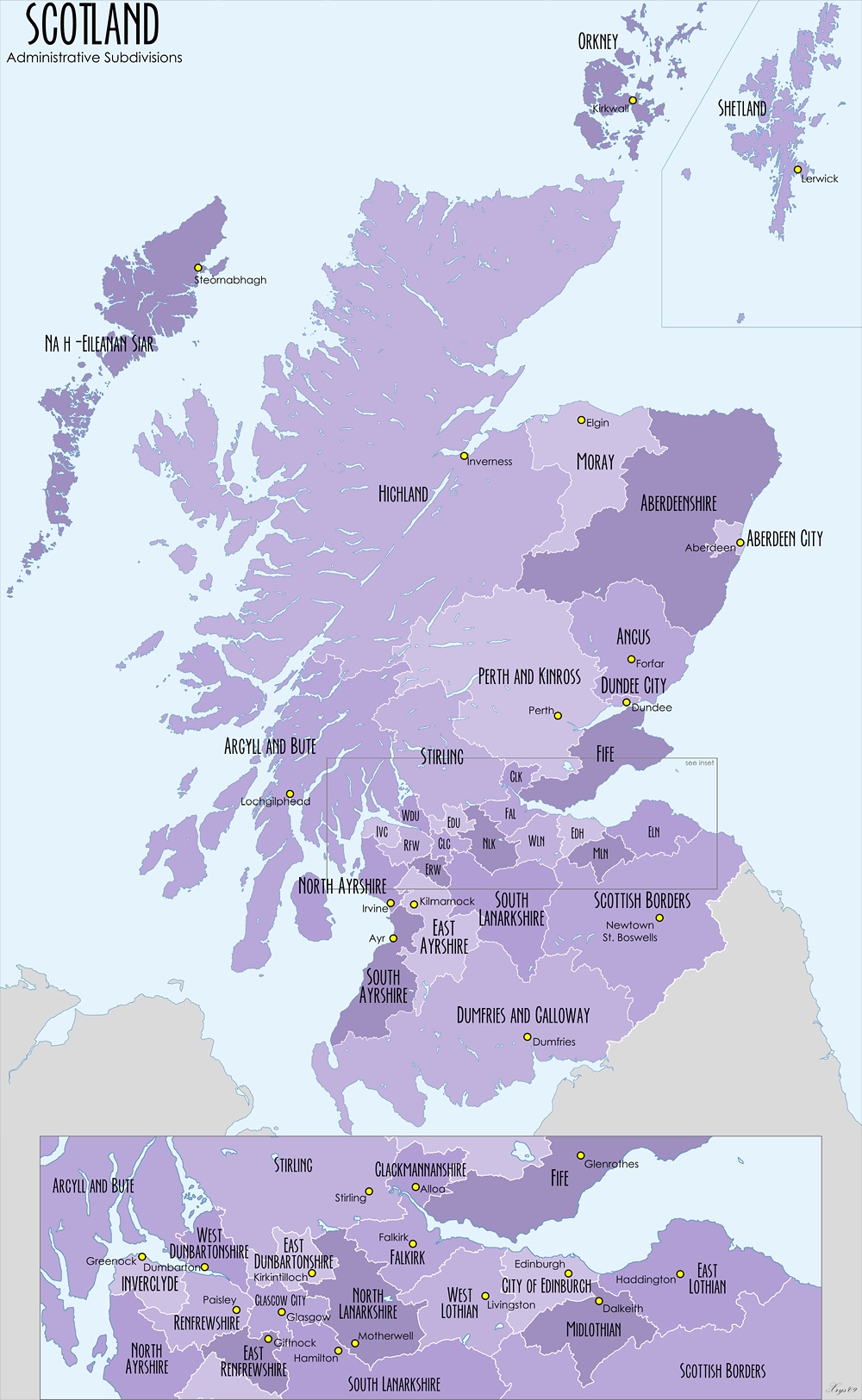
Scotland’s geography suggests that our future local authorities should be determined by spheres of influence, ranging in population size with scope for combining certain functions. This is more important than whether democratically accountable bodies may, or may not have elected Mayors/Convenors
Once elected, English Mayors have exclusive powers and co-decision powers, unlike Scotland where power lies with the Council –. all the elected members. The Council can formally delegate these powers and decision-making responsibilities to its Committees, its Sub Committees and to Officials but never to one Councillor. The idea that one person, albeit directly elected, having exclusive powers is currently not possible here.
Before the idea of Mayors takes root, we suggest that the time is now right to understand what these elected politicians actually do, their powers and assess if they really make a difference.
Elected mayors – power and responsibility
A local referendum is held to decide if an area wants an elected mayor. There are currently 27 elected mayors in England, fourteen as Strategic Authority Mayors with the remainder as Local Authority mayors. Five of these city region mayors replicate the metropolitan counties that were abolished in 1986, Greater Manchester, West Midlands, Liverpool City Region, South Yorkshire, and West Yorkshire, whilst the North East which includes Sunderland, Northumberland and County Durham.
Many of the previous directly elected mayors in local authorities have been abolished and the English Devolution Act 2026 allows no further elected mayors for existing local authorities. In effect, the English Local Government map has been redrawn with the collaboration of existing councils by the simple expedient of devolving both powers and budgets.
Using Manchester as a case study, the elected Mayor is responsible for the strategic governance of a number of local government services in the Greater Manchester area including combined health and social care services, transport, strategic planning, waste management, police, fire and rescue, housing and skills.
Figurehead and ambassador
The Mayor chairs the Greater Manchester Combined Authority (GMCA) which comprises the political leaders of the area’s ten local authorities (Bolton, Bury, Oldham, Manchester, Rochdale, Salford, Stockport, Tameside, Trafford and Wigan). Each of these Councils continue to deliver the full range of Council services in their areas.
Strategies for the above named services are agreed at GMCA and implemented by each Council. Clearly the quality of the working relationships between the Mayor’s office and each of the ten Council leaders has been central to area’s success. Individual Councils have the power to veto any of the Mayor’s proposals if two thirds of their Councillors agree.
Regional public transport is organised and delivered by the Mayor’s office albeit following agreement with constituent Councils.
In Manchester’s case therefore the role of the Mayor can be summarised as:
- Setting the policy direction of the GMCA and working with the ten Councils and other Partners to ensure implementation
- Delivering public transport in the Greater Manchester area
- Acting as the Police and Crime Commissioner
- Acting as both a Figurehead and Ambassador for the Greater Manchester area
A track record of working together
Advocates of injecting elected Mayors/Convenors into the Scottish system should note that following the Conservative Government’s 1986 abolition of Greater Manchester Council, the ten Councils established a Greater Manchester Combined Authority in 2011. They have therefore been working across political, geographic and professional boundaries for fifteen years, the last nine with an elected Mayor.
This process of joint working has been reinforced through the ten Councils’ ownership of Manchester Airport which now handles 32 million passengers a year connecting the area with countries across the globe. Employment at the Airport sits at over 21,000.
The Airport Company’s purchase in 2013 of Stanstead Airport for £1.5billion, partly funded by the sale of 35% of the Airport’s shares to a private equity Company, represented another positive example of the combined local authorities’ ambitions. In 2025/6 the Airport Company’s profit was £304m.
Coalition of the willing
Many who worked for local Councils have reported how they were encouraged to “think Greater Manchester,” i.e. think regional and act local.
Much of the emphasis on the area’s success is placed on the quality of the working relations between the Council leaders the elected Mayor. But that has also required equally good relations at working level and many who worked for local Councils have reported how they were encouraged to “think Greater Manchester,” i.e. think regional and act local.
With that type of shared and focused approach being embraced by the employees of all the authorities over many years, it’s no surprise that this particular city region is a success.
In focusing on Manchester, the most successful city region outside London, it is evident that something special has been happening there for some considerable time. The elected Mayor, the area’s constituent Councils, other local public bodies and voluntary organisations, all operating with a pro- business approach have delivered much for the 3 million people living in the Greater Manchester area.
On being elected Mayor in 2017, Andy Burnham joined a powerful organisation with a strong track record of joint working, with a cross organisational ethos.
Arguably, this is the secret: through established collaboration Burnham has been able to promote and successfully develop his priorities over the past nine years.
Leave a Reply