
Voter turnout is down in Scotland’s parliamentary elections but up in England’s local elections. What does that mean? Expert political commentators assess the implications of the ‘seismic’ 2026 election in this extract from The Conversation , Let’s begin with the view from and about Scotland.
Few big surprises emerge from Scotland’s ‘scunnered’ vote
Murray Leith Professor of Political Science, University of the West of Scotland
In Scotland the polls seemed to be right. The SNP will be be the largest party but will not have a majority. We saw low turnout in many areas, although with some limited, high-turnout, hard-fought constituency battles. Holyrood continues to be a multi-party system with a dominant SNP, but there have been some areas of change.
Nothing shows this better than the Greens winning their first constituency seats (and beating former cabinet minister Angus Robertson into third place), the SNP taking the long-held Liberal Democrat stronghold of the Shetland Islands, and Labour taking Na h-Eileanan an Iar from the SNP. And then you have Reform UK, which has gained regional seats across Scotland. The rise of the Greens and Reform are not at the expense of the SNP, but of Labour and the Conservatives. But the SNP vote share is down too.
What does the result mean? Pundits are calling it the “scunnered” election, a Scottish word that can mean frustrated, irritated or exhausted. It seems suitable. So, what next, Scotland – more of the same? It is certainly a very mixed picture, with some change. Just no change in government.
From patchwork to pointillist painting
Tim Bale Professor of Politics, Queen Mary, University of London
English local elections involve county, borough and district councils, as well as mayoralties. They take place in some parts of the country but not in others, and in some places all of the seats on a council are up for grabs, while in others it’s only a third.
No wonder, then, that one of the go-to clichés that politicians and pundits routinely reach for on a day like today is “patchwork”. Yet even that may not do justice to the complex reality now that we have entered the era of five- rather than two-party politics.
A better analogy now might be a pointillist painting – lots of coloured dots that resolve themselves into a complete scene as the picture gradually takes shape. Much of what we’ll see in the initial analysis – especially when it comes to those spinning party lines – will be a tale, to quote Shakespeare’s Macbeth, “told by an idiot, full of sound and fury. Signifying nothing.”
Once we know what the myriad contests fought on Thursday mean for the parties’ national vote shares, we’ll be better able to tell whether what we’ve seen in opinion polls was borne out at the ballot box. What I’ll be looking for in particular is whether Reform UK, for all that it has won a huge number of seats, has actually stalled slightly compared to last year, and whether Tory leader Kemi Badenoch’s much-hyped recent progress has made much difference to her party’s performance.
What next for Starmer and Labour?
Karl Pike, Senior Lecturer in Public Policy, Queen Mary, University of London
Keir Starmer is in a kind of lame duck political position – very few people think the prime minister will lead Labour into the next general election. His authority is gradually reducing, and losing these elections around the UK will reduce it further. On that, most people within the Labour party can agree. But they cannot agree on how to respond, and the options Labour MPs have for changing their leader are complicated.
Mayor of Greater Manchester Andy Burnham could win enough support within the parliamentary Labour party (PLP) to challenge Starmer. Or he could succeed Starmer if he stepped aside, and win a majority of Labour members and affiliated supporters in the event of a contest. But the Burnham option requires some choreography that could be disrupted. Burnham is not an MP, and could still be blocked from standing by Labour’s national executive committee. Any Labour leadership contest would have to follow a successful byelection victory for Labour and for Burnham.
Angela Rayner continues to be popular in the party, but there are lingering doubts after her exit from government over her tax affairs. Wes Streeting could probably only become leader if the PLP opted to nominate just one politician, removing the need for a contest. If any candidate from the PLP’s “soft-left” stood against Streeting, I think Streeting would struggle to win.
So the who, when and how all remain up in the air. Meanwhile, the UK government has important jobs to do, all of which require people to focus on governing, rather than party management. It is not clear that the PLP has a majority view on what a different government direction should look like.
I cannot predict what will happen next. It seems unlikely that Starmer can continue to lead Labour into next year and beyond. But much of the discussion around a change of leadership seems to involve a political high-wire act. This is why, for some time now, Labour MPs have been unhappy – but unsure of what to do about it.
The death of two-party politics? Tactical voting means we can’t say that for certain
Thomas Lockwood, PhD Candidate in Politics, York St John University
Early results from England’s local elections might suggest increasing fragmentation in the party system, but “five-party politics” is better understood as an emerging pattern than a settled reality. What stands out most is not a clean realignment, but continued tactical voting and localised switching. Voters are choosing between multiple viable parties depending on context. This might be, for example, prioritising immigration and national discontent in red wall towns, or focusing on environmental concerns and housing in urban and university areas, rather than shifting permanently between fixed blocs.
For the first time in nearly 50 years, Labour has lost Tameside Council in Greater Manchester, which has fallen to no overall control. This is significant as it’s the council area for the constituency of Labour’s former deputy leader Angela Rayner.
On its own, it’s not a seat-threatening result for the next general election, but it is a serious long-term warning sign for Labour’s heartlands. Combined with the wider picture of Reform gaining hundreds of councillors, it shows that the “disrupter” dynamic is structural, not fleeting. But whether these localised surges harden into a durable five-party system, or remain heavily shaped by tactical voting and specific local contexts, will only become clearer in time.
So far, however, Reform will be feeling very encouraged by the state of play.
The turnout story – a win for democracy
Hannah Bunting Senior Lecturer in Quantitative British Politics, University of Exeter
A really interesting trend in the English local elections is one that is positive for democracy. Turnout appears to have been noticeably higher, possibly by up to eight points on average overall and doubling in some areas. Although Reform is winning in the lowest-turnout areas, reflective of the geography and demographics they are targeting, wards where Reform are winning saw the biggest increases in turnout.
This indicates that Reform is motivating supporters who don’t usually cast a ballot in local elections – however the increase might also be due to an anti-Reform vote. Either way, it appears voters’ lack of participation in recent years was partly because they did not feel that had something to vote for (or against). For some, that has now changed.
It looks to be the opposite story for turnout in Scotland. Coming from a high in 2021, average turnout fell. This may be a further sign of the SNP’s unpopularity, or a sophisticated electorate who understand how their voting system works. It was clear that the incumbent party was going to win, but with reduced enthusiasm from voters. Both are reasons to stay home – with neither jeopardy nor positivity as motivation.
The challanges for Plaid governing in Wales
Bettina Petersohn Senior Lecturer in Politics, Swansea University
The question now is: can Plaid Cymru govern alone or does it need support from other parties in the Senedd? Depending on where the support is coming from, Plaid might struggle to please everyone.
Data from the Welsh Election Study indicates that while Plaid and the Greens are viewed positively, sentiments towards Labour are mainly negative. So a support agreement between Plaid and Labour may be met with scepticism from both their voters.
Bad news for female representation?
Ceri Fowler Career Development Fellow in Comparative Politics, University of Oxford
These results suggest that women’s representation in local government will decline. Research undertaken before the election showed that the proportion of women and non-binary candidates varied substantially by party. Overall, around 31% of candidates at this election were women or non-binary, but for the Greens and Labour this is more than 40%. For Reform UK, only 23% of its candidates are women or non-binary.
The success of Reform at this set of local elections, and the decline of Labour, therefore means that even fewer women are likely to be in local government than there were before. If Reform also sees similar success in Wales and Scotland, there may be fewer women in the devolved parliaments too. This is the opposite of the 2024 general election, where the success of Labour led to historic highs in women’s representation. These results show, yet again, how women’s representation is conditional on the success of left-leaning parties.
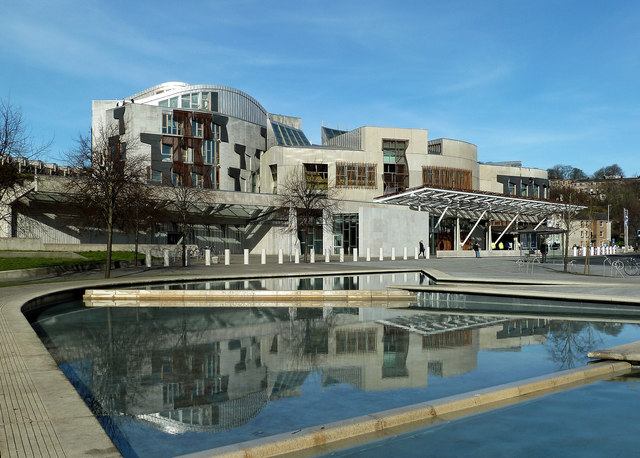
Featured image: Scottish Parliament building; Mary and Angus Hogg, Geograph Project/Wikimedia Commons, CC BY-SA 2.0
See full article on The Conversation: Elections 2026: Experts react to the Reform surge and Labour losses
Leave a Reply