

While there is much to celebrate in Scotland’s educational history, the country has not been generous in its treatment of educational innovators. Indeed, some have been driven south of the border in order to put their ideas into practice. Both Margaret McMillan (1860-1931) and A. S. Neill (1883-1973) received their schooling in Scotland, but found the Calvinist tradition hostile to their vision of how children should be treated.
McMillan’s pioneering work with deprived pre-school children in Bradford and London (in the latter, working with her sister Rachel) helped to awaken political leaders to the importance of health and nutrition as crucial factors in early child development. She was also a great advocate of outdoor learning, which, a century later, has become a popular idea. 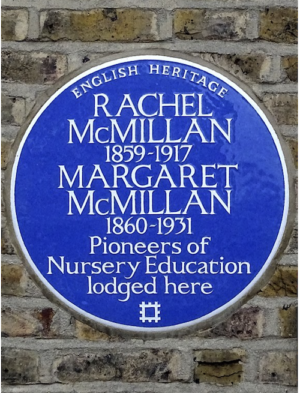
McMillan was made a Companion of Honour in 1930 but, although she sought to promote her ideas in Scotland, only a small band of enthusiasts took them up during her lifetime. In 2017, the Education Building at Goldsmith’s College, London, was renamed the Margaret McMillan Building, following a campaign by staff and students to honour her achievements as a social and educational reformer.
Neill’s independent progressive school, Summerhill, located in Suffolk, embodied a belief that children would flourish when allowed freedom and self-expression. Rejecting the idea of original sin, he believed that children were innately good and that behaviour problems were often caused by ill-judged adult prohibitions. His books and articles inspired progressive educators throughout the world and, in England, he received three honorary degrees (from the universities of Exeter, Newcastle and Essex). In Scotland, there was no similar recognition from the university he attended as a student (Edinburgh).
R.F. Mackenzie (1910-87) had some success in developing a progressive philosophy at Braehead, a junior secondary school in Fife, but when he tried to apply it in a large comprehensive in Aberdeen, he ran into serious problems, encountering opposition from professional colleagues, council officials and a hostile press. He was first suspended and then dismissed. His passionate writings nevertheless encouraged many teachers who shared his belief in the need to end corporal punishment and to re-think curriculum content to make it more appealing to the majority of youngsters, not just those who would do well in examinations.
Academics too who dared to challenge orthodoxies were rarely given the recognition they deserved. William Boyd (1874-1962), who was Head of the Education Department at Glasgow University for many years, was a leading figure in the New Education Fellowship, an international movement promoting innovative thinking on pedagogy and child development. He also opened the first child guidance clinic in Glasgow and led an ambitious project in adult and community education in Clydebank during the recession of the 1930s. Despite all this, he was never awarded a professorship, which he certainly merited. As a mark of the high regard in which he was held, headteachers made representations to the General Council of the university in support of the establishment of a chair, but it was not until after Boyd had retired that one was created. It has been suggested that his socialist politics – albeit of a moderate kind – may have been a factor.
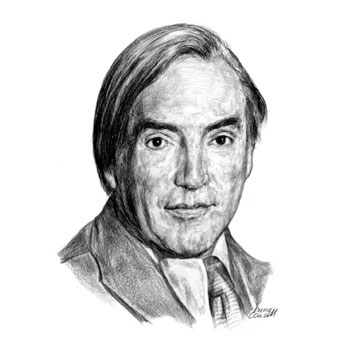 A more recent example is Lawrence Stenhouse (1926-1982) who, though born in England, always thought of himself as a Scot. Both his parents came from Dundee and he attended the universities of St Andrews and Glasgow. After teaching in schools in Glasgow and Fife, and a period working at the University of Durham, he was appointed Head of Education at Jordanhill College. He was not particularly happy there, finding it conservative and uninterested in research, and after six years he accepted an invitation to lead the Humanities Curriculum Project funded by the Schools Council and the Nuffield Foundation in England. There he did ground breaking work, leading to his major publication in 1975, An Introduction to Curriculum Research and Development.
In that, he argued that there can be no effective curriculum development without teacher development, and that teachers should be encouraged to become researchers into their own professional practice. If Stenhouse’s ideas had formed part of the deliberations of the review group which produced Curriculum for Excellence, some of the difficulties encountered by that reform programme might have been avoided. After his early death, the quality of Stenhouse’s work was recognised in England by memorial lectures and publications honouring his achievements. There was nothing comparable in Scotland.
Authoritarianism then and now
How is this hostility to innovative thinking to be explained? The reasons are historical, bureaucratic and cultural. Prior to the Education (Scotland) Act of 1872, most (but not all) schooling was controlled by the Presbyterian churches: the Disruption of 1843 had led to parallel provision by the Church of Scotland and the Free Church. The dominant ethos could be described as ecclesiastical authoritarianism, in which virtue (or the appearance of virtue) was regarded as just as important as knowledge. Post-1872, when the power of the churches was diminished, though not completely extinguished, a new form of authoritarianism – bureaucratic rather than religious – emerged.
The Act introduced mass compulsory schooling for all 5-13 year olds, controlled by the state. This was a challenging administrative exercise and involved setting up uniform systems and structures, subject to tight financial scrutiny. Strong control was exercised by a succession of able but very directive Permanent Secretaries of the Scottish Education Department (SED) – Henry Craik (who was in post from 1885 to 1904), John Struthers (1904-1921), and George Macdonald (1922-1928). All three received knighthoods for their services. After his retirement from the SED, Craik became a Unionist (Conservative) MP and made speeches in the House of Commons opposing various enlightened educational proposals.
There were complaints about the way the SED functioned, particularly the fact that it was officially based in London – a situation that continued until the late 1930s – and showed insensitivity to the particular circumstances of many Scottish schools, especially those in rural and island communities. There was, however, little effective counterweight. Teachers’ associations were keen to enhance their professional status and were disinclined to protest too stridently. A culture of timid respectability became their default position, and while official policies were sometimes opposed, this rarely led to militant action.
Furthermore, when an Advisory Council was established under the Education (Scotland) Act of 1918, its activities were effectively neutralised by clever civil service manipulation of its membership and terms of reference, techniques that continue today. Even when, in 1947, the Advisory Council produced an impressive report on the future direction of secondary education, senior officials were able to prevent its implementation. In the period after World War II, the SED acquired the reputation of being an organisation into which good ideas were lured, only to be strangled and quietly buried.
Who dare question bureaucracy?
It can be concluded that powerful bureaucratic structures have been a key factor in preventing innovation. New ideas run the risk of disrupting established systems, of casting doubt on the wisdom of routine practices, and of raising disturbing fundamental questions about the aims of education. The historian T.C. Smout, writing in the 1980s, stated that ‘some of the more depressing aspects of modern Scotland’ could be traced to educational institutions that ‘afforded established authority and tradition an exaggerated respect’. And earlier this year, a report produced by the Social Market Foundation argued that Scottish education needs to be more open to innovation and experimentation if it is to make significant progress.
Scots have a self-image of being frank and forthright. Within the professions at least, this is rarely justified. Agreement with official policy rather than plain speaking is the dominant form of discourse at the upper levels of Scottish education. Similar tendencies can be seen in law and medicine. Lawyers are trained to show due regard to the conventions and hierarchies of their field. Within Scotland (perhaps less so in England) the term ‘radical lawyer’ seems a contradiction in terms. Again, in medicine, there are career penalties for those who dare to question the confident pronouncements of their institutional leaders, as the experience of whistleblowers has shown.
All this suggests that there is a deep cultural issue to be addressed, requiring us to re-examine our assumptions and values. In his provocative book, Is Scotland Educated?, first published in 1936 and recently reissued, A. S. Neill argued that a potent mixture of residual Calvinism and ascendant capitalism, reinforced through a system of schooling that suppressed dissident voices and rewarded compliant functionaries, was at the heart of Scotland’s cultural malaise. Is it any wonder that original, creative Scots were sometimes not honoured in their own land?
Thumbnail image: ‘Education of the Citizen’ drawing by Rudolf von Ripper from his masterwork Écraser l’Infâme first featured on these pages. Others – English Heritage blue plaque to Rachel and Margaret McMillan, and Lawrence Stenhouse – via Wikimedia Commons CC BY SA 4.0

Further reading by Walter Humes for Sceptical Scot: includes: Seven Reasons why Scottish Education is under-performing, Rebranding the Curriculum for Excellence, Two attainment gaps in Scottish Education and Education: no more business as usual
Leave a Reply