
In early 2021 we drew attention to the inconvenient truth of the high number of infants in Scotland separated from their mothers before their first birthday, many in the first week of life[1].
Between 2008 and 2017 one in every 85 children born in Scotland was in public care at some time before their first birthday: this represents 6,180 infants, a third of whom were less than a week old.[2] We made plain the lack of attention paid to these infants in the report of the Independent Care Review[3]. This was to be a once in a generation review of all children in the public care system in Scotland. Its purpose was to bring a sea change in the public care of all of them.
The outcome of the Independent Care Review was The Promise, a promissory note to all children entering or already in public care. In future Scotland was to shift the focus of public care away from protection from harm to protecting all safe, loving, respectful relationships and to support families to stay together. A set of three Plans spanning the ten years 2020 to 2030 was devised. The initial Plan (2021-2024) was to focus on ‘urgent and immediate changes…’ that would significantly improve the lives of children and young people in public care and their families.
Following her tenure as Chair of the Independent Care Review Fiona Duncan was appointed as Chair of the Promise Oversight Board in May 2020, to ensure implementation of the Promise. The Promise Oversight Board has no ‘formal basis’ or power to enforce change. In July 2020 John Swinney updated the Scottish Parliament on progress pledging an initial investment of £4 million. In September 2021 the government announced £500 million over the course of this parliament to reduce the number of children and young people in care by 2030 (the Whole Family Wellbeing Fund[4]). A new Care Experience Grant of £200 per annum to address financial disadvantage is proposed for all 16–26-year-olds leaving care.
Where are the weans?
The initial Plan (2021-2024) proposes little for infants. They leave a scant trail in Plan (2021-2024) despite their numbers in public care. Their position is precarious. Unless you really think about it you won’t notice their absence. Why would any review of children in public care not make infants a group of special interest? Why are they more or less missing in Plan (2021-2024)?
This makes no sense given a widely publicised history of poor treatment of children in state child welfare institutions – entailing high levels of infant mortality, mass adoptions and stolen generations. In Scotland a public apology for the forced adoptions of infants in the 50s, 60s, and 70s is still awaited.
The current position in Scotland is just not good enough. Infant removals continue to this day. They do not lie in our past. This trend is found in other wealthy countries (for example England, Australia[5]) yet elsewhere infant removals appear more subject to public scrutiny. An infant entering care in 2016, when the Independent Care Review was launched by the First Minister, will be 14 years of age by 2030. Hardly a sea change. More surely a glacial pace.
The failure to address infant removals directly in Plan (2021-2024) is not a small one. It comprises and conceals the consequences for these infants and their mothers. Their very existence is shaken. First there is the hazard of removal at birth and second exposure to what happens to them hereafter. Harm is caused and good outcomes are far from guaranteed for infant and mother. The Scottish Child Abuse Inquiry[6] continues to expose the harms caused to children in institutions, including those children who were subjected to migration programmes. In the absence of detailed recommendations from Plan (2021-2024) it is unlikely much will change for these mothers and their babies.
We should be ambitious for these infants. Their position must migrate from the margins to the centre. But we also need to be honest about the political will and budgets that are needed. Looking away doesn’t help. It neither drives social change nor allows for the real-life stories of real-life people to be heard. Make no mistake, the high number of infants in Scotland taken into public care before their first birthday is a bad position which we could prevent from getting worse. We must confront now – head-on – the image of ties that once bound broken off, and what is lost here.
Otherwise, can we be confident that 20 to 30 years down the line another apology will not be due? Or that one is not already due?
[2] httpss://assets.adobe.com/public/36a973ab-51ac-412a-77fd-fabe8772ca0c
[3] 5th February 2020 (httpss://www.carereview.scot/conclusions/independent-care-review-reports/).
[4] httpss://www.gov.scot/news/keeping-families-together/
[5]httpss://www.telethonkids.org.au/our-research/reports-and-findings/2019/april-2019/infant-removals-the-need-to-address-the-over/ ; httpss://www.nuffieldfjo.org.uk/resource/born-into-care-newborns-in-care-proceedings-in-england-final-report-october-2018
[6] httpss://www.childabuseinquiry.scot/evidence/investigations/
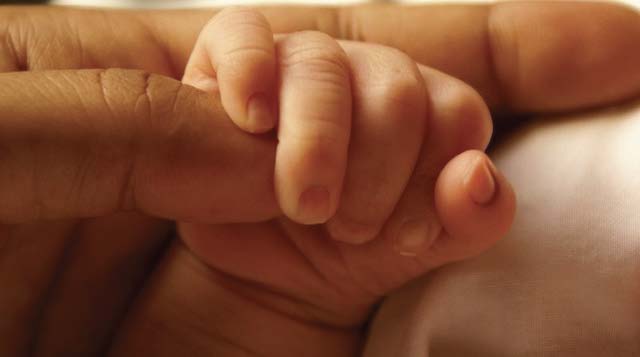
Featured image: Hold on tight, holding on to mother’s hand by S.Raj via flickr CC BY-NC-ND 2.0
Leave a Reply