

The Sustainable Growth Commission suggested continuing to use the pound after independence but then moving to a new Scottish currency once the time is right and tests are met.
There is now an increasingly popular movement calling for Scotland, if it chooses to become independent, to establish its own currency as soon as possible.
This movement isn’t just popular, it’s right.
To be clear, I’m not commenting on the speed of transition nor suggesting that Scotland should become independent. But it would be remiss of any economist if they failed to consider what economic policies Scotland might pursue under different constitutional arrangements.
There is no clear best currency option; there are some benefits and costs attached to all future potential currency arrangements. There are questions over whether the UK’s monetary policy is best suited to the Scottish economy, what resources are needed to back a new currency, or whether Scotland should adopt the euro: There is no easy answer to the question of currency.
Keeping the pound (Sterling) within a formal currency union is likely to mean less control of Scotland’s key economic levers, including setting interest rates. Scotland’s tax and spending decisions and economic policy choices would need to be made in agreement with the remaining parts of the UK.
For example, Europe’s Stability and Growth Pact (SGP) sets out rules to curb excessive budget deficits and public debt. Euro area members face further scrutiny, submitting draft budget plans for assessment by the European Commission to ensure compliance with its economic rules.
Scottish pound
A new Scottish pound could be pegged to Sterling, a procedure often called Sterlingisation, but this could potentially be at significant cost if the economic fortunes of Scotland and the UK diverge as I indicate below.
The challenges and costs of setting up a new currency have been debated extensively, including the amount of reserves needed to back it and how a newly independent Scotland might work with the remaining parts of the UK. The reserves needed to back any new currency would be substantial, most likely tens of billions depending on how Scotland’s financial system was structured. These reserves are un unlikely to be met by any inheritance from the UK.
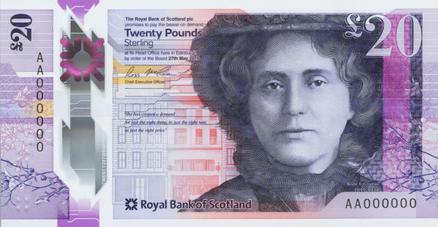
If a new Scottish pound were pegged to Sterling, it’s possible that English and Scottish notes could be used in the same way as they are today. Scotland would be able to print its own money and set interest rates; indeed, these would be valuable and necessary levers in order to maintain any link with Sterling.
But Sterlingisation means the Scottish Government would need to absorb movements between the two currencies to ensure a continuing smooth flow, effectively insuring households and businesses against any exchange rate shocks. But the cost of acting as a shock absorber is likely to run into billions of pounds and would be at the cost of public services, so this would be a brave decision for any new administration to make.
At what real cost?
The costs of pegging a new Scottish pound to Sterling could rise if the economic fortunes of Scotland and the remaining parts of the UK diverge. The value of any new Scottish currency will be driven among other things by economic growth, inflation and the extent of any Scottish borrowing. If these drivers in Scotland and rUK take different paths, then the Scottish Government would need to commit additional resources to maintain the currency link.
For example, the UK entered the European Exchange Rate Mechanism (ERM) in October 1990 but was forced to leave less than two years later in September 1992 on ‘Black Wednesday’.
Significant differences between the economy of the UK and other ERM economies, Germany in particular, led to a fall in pound. The Treasury’s attempts to defend the value of the pound were unsuccessful with the cost of Black Wednesday estimated to be between £5 – £6 billion in today’s prices.
Any future currency arrangement should seek to balance costs and risks across households, businesses and the public sector. Maintaining the link between a Scots pound and Sterling over the longer term would become a difficult (but not impossible) balancing act, particularly if Scotland simultaneously strives to meet Europe’s fiscal rules in order to re-join the EU.
The economic levers would be available, but Scotland would need to commit to decisions that may sacrifice some economic growth, spending or impose a higher cost of living in order to ensure the currency is maintained. This commitment would be tested through confidence in the new Scottish currency and the ability of the Scottish Government to maintain the link with Sterling. Ultimately markets will cast judgement on any proposed currency arrangement and a loss of market confidence in the currency link would add further, and likely unsustainable, costs.
For these reasons, no credible economist would advocate Sterlingisation as the policy of choice for an independent Scotland. This would effectively involve Scotland accepting monetary policy as set by the Bank of England (BoE), including interest rates. The BoE now takes Scotland’s economy into account when adjusting monetary policy but it would no longer have to do this if Scotland opted to use the pound Sterling outside of a formal currency union.
International experiences
The Greek and German economies provide a stark example of the need for monetary policy to reflect and support a nation’s economic prospects. There are examples of long-term ‘Dollarization’ among microstates, but Scotland is hardly comparable.
A small number of larger countries, including Brazil in the 90s, also pegged the US Dollar, but this has usually been in response to an economic collapse with Dollarization used to curb inflation and promote economic stability. These examples involve developing countries reliant on agriculture. By contrast Scotland has a highly developed economy, with a sophisticated financial services system and broad range of goods and services exported to international markets.
Furthermore, it’s difficult to see why a newly independent Scotland, with an ambition to re-join the EU, would seek to informally use Sterling. If options of last resort are being considered, Scotland may consider linking to other currencies, including the Euro, in the short term while a new Scottish currency is established – by far the best option would be to establish a new Scottish currency as early as possible or reach an agreement for a formal currency union with the UK.
Debate is joined
In truth, aside from timing, there is not much room for disagreement on the subject of currency among supporters of independence. The criticisms levelled at the Sustainable Growth Commission report on currency (see Part C) reflect wider tensions around the need for a new blueprint for Scotland’s economy and how radical this should be.
On the one hand, the Commission set out a vision of an independent Scotland emphasising fiscal responsibility, raising productivity and rebuilding links with the EU. Those advocating a more radical blueprint envisage an expanded public sector unrestrained by the need to balance the books (modern monetary theory) and a slightly cooler approach to re-joining the EU.
These views are incompatible and the intensity of debate around currency partly reflects this.
Sterlingisation might be a policy of last resort, but this is also true of calls to expand public spending whilst controlling inflation through adjusting tax rates rather than interest rates. But there are issues raised by all sides for which there is broad consensus and a strong supporting body of evidence.
For example, Scotland’s current fiscal framework is being tested to the point of destruction. Scotland’s borrowing powers should be expanded and made more flexible, perhaps even allowing for borrowing on international markets. The Scottish Government’s funding should be free of constraints around capital and revenue and it should afford the same grace to local councils, allowing more flexibility on how money is spent locally.
The quality of debate around some of these issues could (and should be lifted) by engaging a much wider audience – including those who may not support independence, or even oppose it.
Featured image of Bank of Scotland HQ on the Mound © Ad Meskens / Wikimedia Commons
See also: Barry Eichengreen on transition to the euro in The Guardian; Richard Murphy on the ‘No 1 independence issue’; John S Warren in Bella Caledonia; Craig Dalzell, Scottish currency options; Ray Perman, Scottish pound, this site; Andrew Smith in Left Foot Forward and many more
Leave a Reply